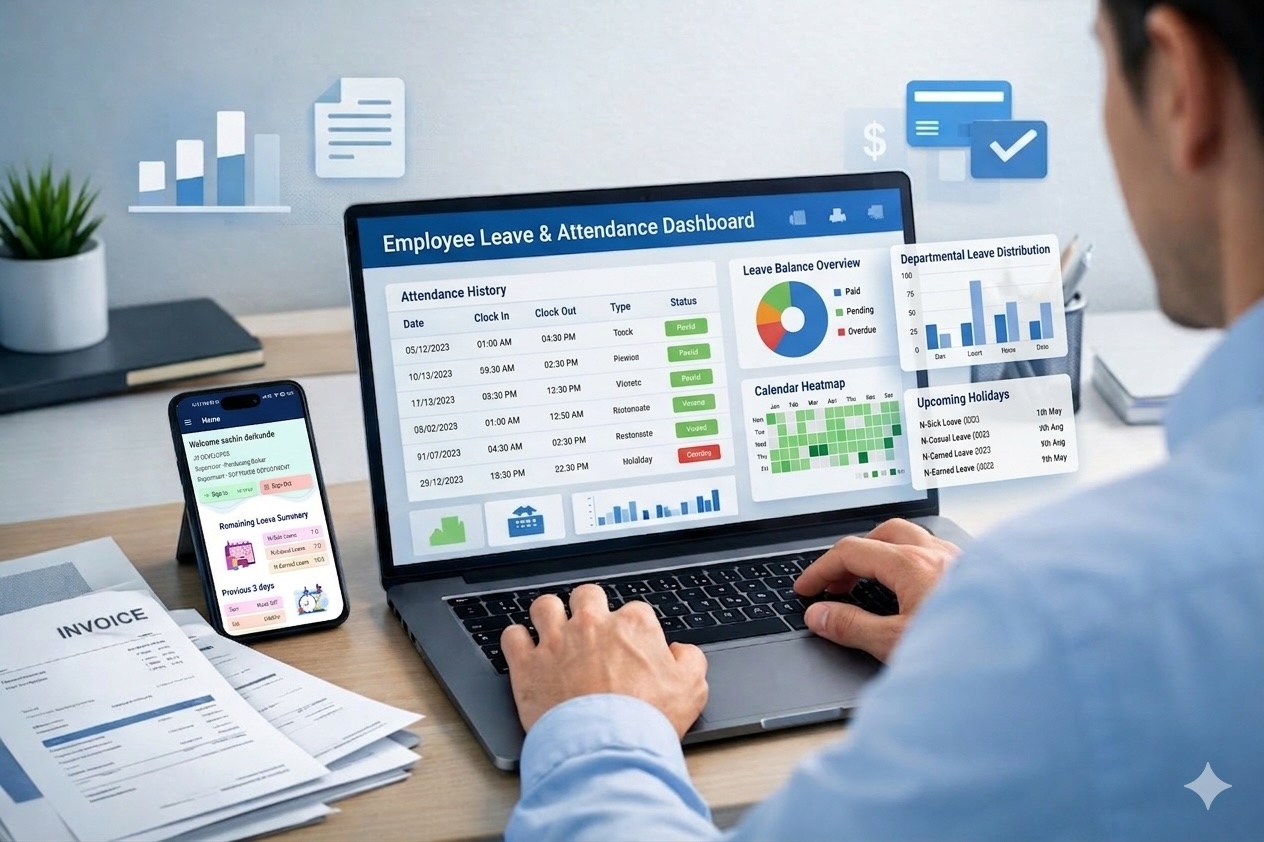
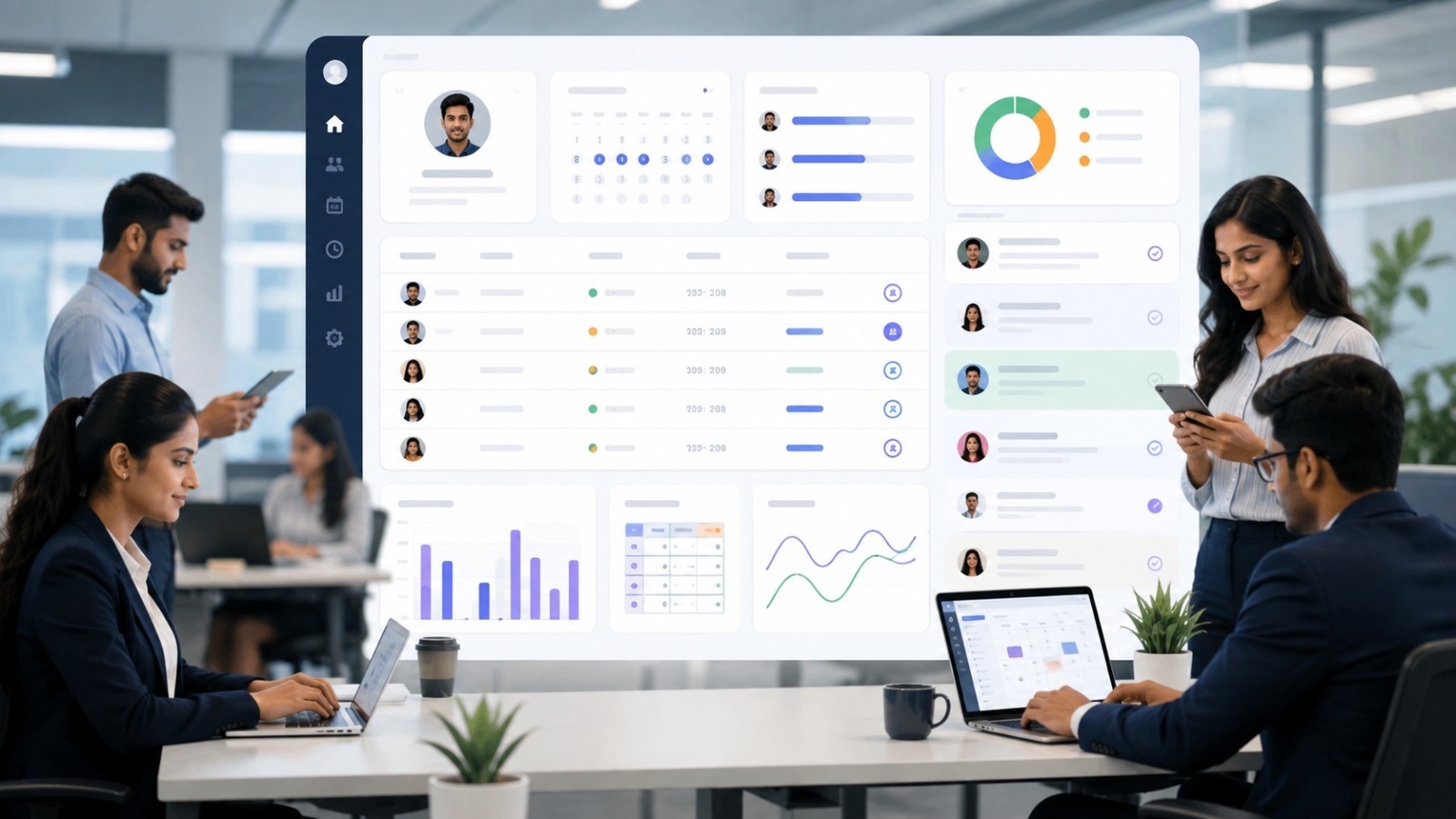
Manual vs Automated Leave and Attendance Management System: Which Is Better?
September 25, 2026 | By Gopareto Marketing
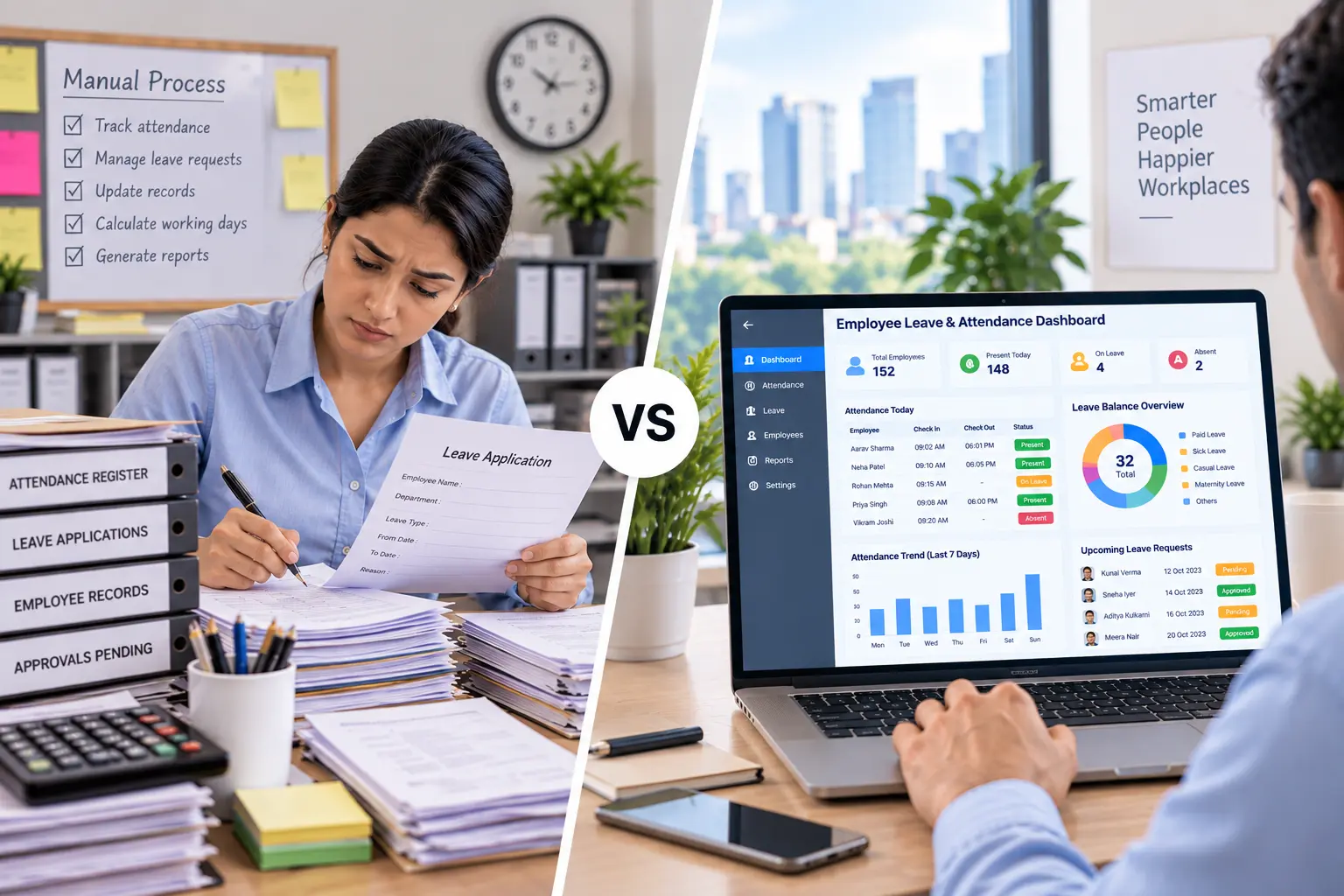
Managing employee attendance and leave may seem straightforward when a business has only a few employees. But as the workforce grows, spreadsheets, paper registers, emails, and manual approvals can become difficult to track. A Leave and Attendance Management System provides businesses with a structured digital approach to recording attendance, handling leave requests, and maintaining workforce records.
So, which is better: manual or automated leave and attendance management? For very small teams with simple requirements, manual processes may be sufficient. However, growing organizations generally benefit from automation because it can reduce repetitive administrative work, improve record consistency, and give HR teams better visibility into workforce data.
What Is Manual Leave and Attendance Management?
Manual attendance management means recording and maintaining employee attendance and leave information without a dedicated automated HR system.
Common Manual Methods
- Paper attendance registers
- Excel or Google Sheets
- Emails for leave requests
- Physical leave application forms
- Separate attendance and payroll records
- Manual approval and reporting processes
These methods can be inexpensive to start with, but administrative complexity typically increases as the number of employees, locations, shifts, or leave requests grows.
What Is an Automated Leave and Attendance Management System?
An automated system provides a centralized digital environment for managing employee attendance and leave-related workflows.
Depending on the platform and configuration, it may help HR teams maintain attendance records, organize employee leave information, manage approval workflows, and generate relevant reports.
Instead of checking different emails, registers, and spreadsheets, authorized users can work from a more centralized source of information.
Manual vs Automated Attendance Management: Key Differences
| Area | Manual | Automated |
|---|---|---|
| Data entry and record keeping | HR or managers enter, update and reconcile records themselves | A standardized process for maintaining attendance and leave records |
| Leave requests and approvals | Email to a manager, wait for approval, then rely on HR to update another record | Requests and approvals organized within a defined workflow |
| Visibility for HR and management | Basic information, with extra work to analyse patterns across teams | Relevant workforce information reviewable from one system |
| Scalability | Increasingly difficult to maintain as the organization expands | Designed to remain workable as headcount grows |
1. Data Entry and Record Keeping
Manual systems require HR staff or managers to enter, update, and reconcile attendance records themselves. Repeated data entry increases administrative effort and may introduce inconsistencies. Automation can create a more standardized process for maintaining attendance and leave records.
2. Leave Requests and Approvals
In a manual environment, an employee might email a manager about leave, wait for approval, and then depend on HR to update another record. A digital leave management workflow can make requests and approvals easier to organize by keeping relevant information within a defined process.
3. Visibility for HR and Management
Spreadsheets may provide basic information, but analyzing attendance patterns across departments or larger teams can require additional work. A dedicated attendance management solution may make it easier to review relevant workforce information from a centralized system.
4. Scalability
Manual processes can become increasingly difficult to maintain as organizations expand. For example, tracking attendance for 15 employees using a spreadsheet may be manageable. Tracking 150 employees across departments, shifts, or locations can require considerably more administrative effort. This is where automation becomes particularly valuable.
What Are the Benefits of Automating Leave and Attendance?
Businesses considering a Leave and Attendance Management System are usually looking to simplify everyday HR administration while maintaining better-organized employee records. An automated approach can offer several practical advantages.
More Efficient HR Workflows
Reducing repetitive attendance and leave administration gives HR teams more time to focus on employee engagement, recruitment, workforce planning, and other higher-value activities.
Better Record Consistency
A structured digital workflow can help reduce the inconsistencies that may occur when information is maintained across separate spreadsheets, emails, or paper documents.
Easier Leave Administration
Centralizing leave requests and records can help employees, managers, and HR teams understand the status of leave-related activities without relying on scattered communication.
Improved Payroll Coordination
Attendance, working days, leave, and other workforce information can influence payroll processes. Organized attendance records make it easier for HR and payroll teams to coordinate relevant information.
Manual vs Automated: Which Should Your Business Choose?
The right choice depends on workforce size, operational complexity, and HR requirements. A manual approach may still work for a very small business with straightforward attendance policies and limited leave activity.
Automation Becomes More Relevant When You See
- Growing employee numbers
- Increasing leave requests
- Multiple teams or departments
- Complex attendance tracking
- Repetitive HR data entry
- Difficulty maintaining accurate records
- Time-consuming monthly attendance reconciliation
Businesses should evaluate the actual capabilities of any HR software before implementation, particularly if integrations, biometric devices, mobile attendance, shift management, or specific compliance requirements are important.
How Can GoPareto Support Attendance Management?
GoPareto provides businesses with a digital option for managing attendance-related HR workflows.
Organizations evaluating attendance software should consider how well the solution fits their existing HR processes, employee structure, reporting requirements, and future growth.
Moving from fragmented manual records to a centralized digital workflow can be particularly useful for startups, SMEs, and growing organizations seeking a more organized approach to workforce administration.
Key Takeaways
Manual attendance management can work for small teams, but its administrative demands can increase as a company grows.
An automated solution can help centralize attendance and leave information, standardize processes, reduce repetitive administration, and make workforce records easier to manage.
Key takeaway: the best system is ultimately one that matches the organization’s workforce size, policies, operational requirements, and expected growth — not the one with the most features.
Make Attendance Management Simpler with GoPareto
Attendance and Leave in One Workflow
- Attendance management replacing registers and spreadsheets
- Leave policy and compliance with defined request and approval workflows
- Centralized workforce records rather than scattered emails and documents
- Attendance information available to payroll rather than re-keyed
- Extensive reports across attendance, leave and workforce data
If spreadsheets and manual leave tracking are consuming valuable HR time, explore GoPareto’s attendance management capabilities and evaluate whether they fit your organization’s workforce requirements. See also manual vs automated attendance tracking.
Conclusion
Choosing between manual and automated attendance management depends on your company’s size and operational complexity. Manual methods can meet simple requirements, but they become harder to maintain as workforce administration expands.
Implementing a Leave and Attendance Management System can provide a more structured, centralized, and scalable approach. For growing businesses, the transition to automation can help simplify routine HR administration while establishing processes capable of supporting future workforce growth.
Frequently Asked Questions (FAQs)
What is a leave and attendance management system?
Is automated attendance better than manual attendance?
What are the disadvantages of manual attendance management?
Can attendance management help with payroll?
When should a company automate attendance management?
Can small businesses use attendance management software?
How do I choose the right attendance management software?
Visit Us
GoPareto - Simple & Complete Business Management solution, Omkar Nandan Apartment, A1 201, near Navale Bridge, Kudale Baug, Narhe, Pune, Maharashtra 411041.
Related Blogs