How to Stop Attendance Fraud in Small Business
August 13, 2026 | By Gopareto Marketing
Here's a scenario that happens more often than people admit: you discover that one of your "hardworking" team members has been having a friend clock in for them. Or someone's been marking themselves present while sitting at home. Or leaves are disappearing without authorisation.
When it happens, business owners react with anger — how could they betray my trust? But the uncomfortable truth is that attendance fraud usually isn't about malice. It's about unclear policies, weak enforcement, peer pressure and systems that are simply too easy to game. Stopping it isn't about becoming a tyrant. It's about creating systems that make fraud hard and obvious, and a culture where it isn't acceptable.
1. Understand What Attendance Fraud Actually Is
Attendance fraud covers more ground than most owners assume:
- Buddy punching — someone else clocks in for you
- Marking yourself present when you're not
- Falsifying leave approvals
- Claiming overtime you didn't work
- Clocking out late to claim extra hours
It also includes managers approving false attendance, marking absentees as present, or covering for friends and favourites. The impact is real money: if someone is paid for eight hours they didn't work and it happens monthly, that's nearly a hundred hours a year for one employee. Multiply that across a team and it becomes a serious payroll leak.
2. Build Systems That Make Fraud Harder
The easiest way to prevent fraud is to make it difficult to commit.
Biometric attendance. Fingerprint or face recognition makes buddy punching close to impossible — you can't fake someone else's fingerprint. It's a one-time hardware cost with very high effectiveness. For very small teams it can be overkill, but as you grow it earns its place.
Badge or card systems. Access cards tied to individuals work on the same principle at lower cost, but they can be shared, so they need enforcement alongside them.
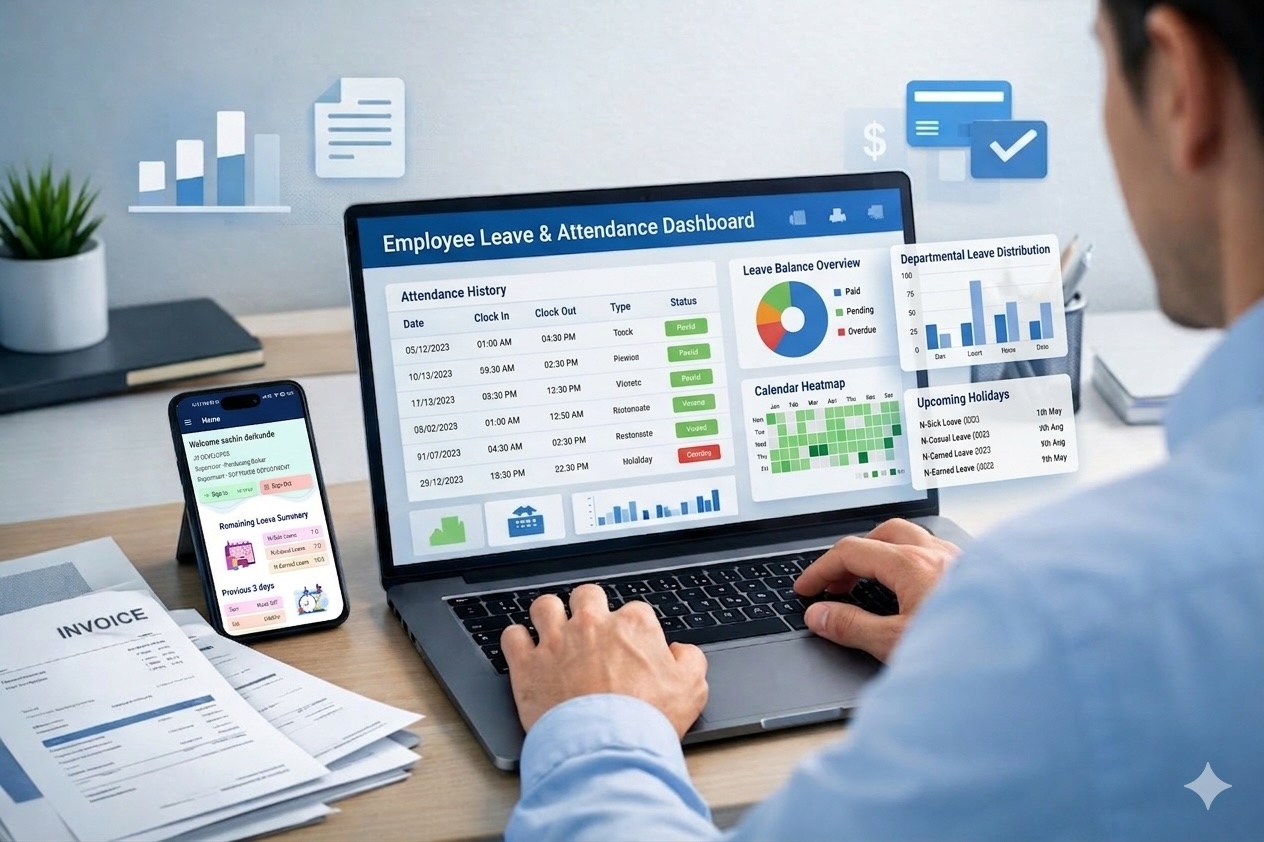
HRMS with digital check-in. A mobile or web-based cloud attendance system records a timestamp with every check-in, optionally with location. It's hard to spoof, cheap per month, and requires nothing more than a phone or browser.
Multiple verification points. Combine methods: app check-in with timestamp, manager confirmation in the same system, reconciliation against project logs or activity, and occasional random audits. Redundancy means faking one signal doesn't get anyone through.
Geofencing for mobile teams. If your team is field-based, the app can recognise arrival at a work location and prompt a one-tap check-in. It's hard to spoof, but it needs a clear written policy because of the privacy implications.
3. Create a Clear Attendance Policy
This is non-negotiable. People need to know exactly what's expected and what happens if they cheat. Your policy should cover:
- What counts as present — available during scheduled hours and ready to work; physically at the assigned location for office roles, or logged in and reachable for remote roles. Normal breaks are fine; extended absences need approval.
- How attendance is tracked — which system, how to clock in and out, and an explicit statement that buddy punching is forbidden.
- What counts as leave — planned leave requested and approved in advance, unexpected absence notified within an hour, partial days approved by a manager, and medical certification for longer sick leave.
- Manager responsibilities — reviewing and approving attendance on a fixed cadence, addressing discrepancies immediately, and never overriding records without documentation.
- Consequences — a documented warning for a first offence, suspension for a second, termination for a pattern, and the same consequences for managers who approve false attendance.
- Privacy protections — attendance data restricted to manager and HR, biometric and location data used only for attendance, and employees told exactly what is tracked.
Write it simply, share it with the whole team, and have everyone acknowledge that they've read and understood it.
4. Monitor and Enforce Consistently
A policy nobody enforces is decoration.
Daily monitoring. Review who clocked in and who didn't, note odd patterns, and alert managers to anything unusual. Fifteen to thirty minutes, and it surfaces the obvious questions: why is someone marked present hours before their usual start, and who approved a leave without a manager signature?
Weekly reporting. Run an attendance report covering absences, leave taken, patterns of late arrival or early departure, and approval issues. Share it with managers and expect follow-up.
Monthly audit. Go deeper: cross-reference attendance against other evidence such as email timestamps, project logs and activity records; look for repeat "forgot to clock in" patterns; and review whether managers are actually reviewing.
Quarterly review with managers. Check whether they're reviewing attendance regularly, addressing discrepancies, missing patterns, or lacking the tools to do the job properly.
5. Address Discrepancies Immediately
When you find something off, deal with it right away — not in anger, but with clarity.
For a minor issue like a single missed punch, ask what happened, correct the record if the explanation is reasonable, and move on. For a pattern, have a direct conversation: name the specifics, listen to the explanation, state plainly that it needs to stop, and document the conversation. For a serious issue such as confirmed buddy punching or falsified leave, hold a formal meeting with the manager and HR, issue a written warning, state the consequence of recurrence and then follow through if it happens.
Consistency is the whole game here. Treat one person harshly and another leniently and you'll lose the team's confidence faster than the fraud ever cost you.
6. Create a Culture Where Honesty Is Expected
In some companies a little fraud is tolerated because "everyone does it." That culture is corrosive. In others, honesty is the default and a breach is immediately conspicuous. You build the second kind deliberately.
Set the tone. Leadership follows the policy. You clock in, you clock out, you take leave properly. People watch what you do far more than what you write.
Celebrate honesty. When someone admits they forgot to clock in or took unplanned time, thank them for the transparency. That signals that owning a mistake is safe.
Call out unethical behaviour. Address confirmed fraud visibly, without public humiliation, so the team knows it gets caught and handled.
Reward integrity. Make reliability and honesty part of how people get recognised and promoted.
Build community. People who feel part of a team don't want to let it down. Culture investment is a fraud prevention tool, not just a nice-to-have.
7. Handle Managers Who Enable Fraud
Sometimes the fraud isn't coming from staff — it's a manager approving false attendance for friends or favourites. That's more damaging, because it undermines trust in the entire system.
You'll spot it when certain people's attendance is never questioned, when the same manager repeatedly approves late or absent staff, when audits show approvals with no documentation, or when employees complain about favouritism.
Address it privately and specifically: name the exact record and the approval that doesn't match it, and ask them to explain. If it's intentional, the consequences should mirror those for employee fraud. If it's negligence, train them on proper review and set the expectation of daily checks — then monitor. A manager who enables fraud is a bigger problem than an employee who commits it.
8. Automate Where Possible
Good systems prevent fraud by making it tedious, obvious and risky.
Rules-based alerts. Configure your system to flag suspicious patterns automatically — absence marked twice in a month without leave approval, activity recorded with no clock-in, leave approved without a manager signature, or the same person apparently clocked in from two locations at once.
Audit trails. Every clock-in, approval, modification and override should be logged with a name and timestamp. If you edit someone's attendance, that edit carries your name.
Real-time dashboards. Give managers live clock-in status for their team, visible discrepancies, pending leave approvals and attendance trends. Real-time visibility means fraud is caught in days rather than at year end.
9. Common Fraud Scenarios and How to Stop Them
Buddy punching. Two people share badges or passwords and one clocks in for the other. Prevent it with biometric or unique credentials, manager confirmation of actual presence, and cross-checks against work activity.
Extended lunch, short day. A two-hour lunch with a normal clock-out means a full day's pay for less work. Require clock-out for breaks, get long lunches approved in advance, and reconcile total hours against calendar time.
Fake sick leave. Require a medical certificate beyond a couple of consecutive days, have a direct conversation where sick leave is frequent, and cross-reference activity records.
Unpaid overtime. The reverse problem, and just as serious. Some employees work past hours without recording it, or record it and never get approval. Publish a clear overtime policy, require manager approval, flag late clock-outs automatically, and pay for overtime you permit.
Manager fraud. Bulk-marking a team present without verification, or approving false leave for favourites. Require daily individual review rather than bulk approval, audit manager approvals, and hold managers accountable for their team's attendance accuracy.
10. Your Attendance Integrity Plan
This month:
- Audit your current system and identify where it's easy to game
- Write and circulate a clear attendance policy if you don't have one
- Upgrade tracking — biometric for maximum security, an HRMS with digital check-in for the best balance, a badge system as a minimum
- Set up daily monitoring, roughly fifteen minutes reviewing and flagging
- Establish a monthly audit that cross-references attendance with other data
- Train managers on their monitoring responsibility
- Set clear written consequences and make them known
- Build the culture: celebrate honesty, address fraud visibly, make integrity normal
Conclusion: The Real Goal
Preventing attendance fraud isn't about being harsh. It's about protecting your payroll so you pay for work actually done, building a fair culture where honest employees see rule-breaking addressed, and maintaining trust in systems that are genuinely enforced.
Done well, you're not creating a police state — you're creating a workplace where honesty is the default and the people who follow the rules feel respected and protected. GoPareto combines digital and biometric-ready check-in, real-time monitoring, automated audit trails and manager controls to make attendance fraud impractical, and honest attendance effortless.
Frequently Asked Questions (FAQs)
1. What is buddy punching and how do you stop it?
Buddy punching is one employee clocking in on behalf of another. Biometric or uniquely tied credentials, manager confirmation of presence, and cross-checks against work activity make it impractical.
2. How much does attendance fraud actually cost a small business?
A single employee paid for eight unworked hours a month loses you close to a hundred hours a year in wages. Across a team, it becomes one of the larger avoidable payroll leaks.
3. Is biometric attendance necessary for a small team?
Not always. A cloud attendance system with timestamped digital check-in, manager review and audit trails is usually sufficient below a certain size; biometrics become worthwhile as headcount grows.
4. What should an attendance policy include?
What counts as present, how attendance is recorded, leave and notification rules, manager review responsibilities, consequences for violations, and how attendance data is protected.
5. How does GoPareto help prevent attendance fraud?
GoPareto records timestamped check-ins from web and mobile, requires manager review, logs every modification in an audit trail, and flags discrepancies through automated reports and alerts.
Visit Us
GoPareto - Simple & Complete Business Management solution, Omkar Nandan Apartment, A1 201, near Navale Bridge, Kudale Baug, Narhe, Pune, Maharashtra 411041.
Related Blogs