How to Track Employee Work Without Spreadsheets or Manual Reports
September 28, 2026 | By Gopareto Marketing
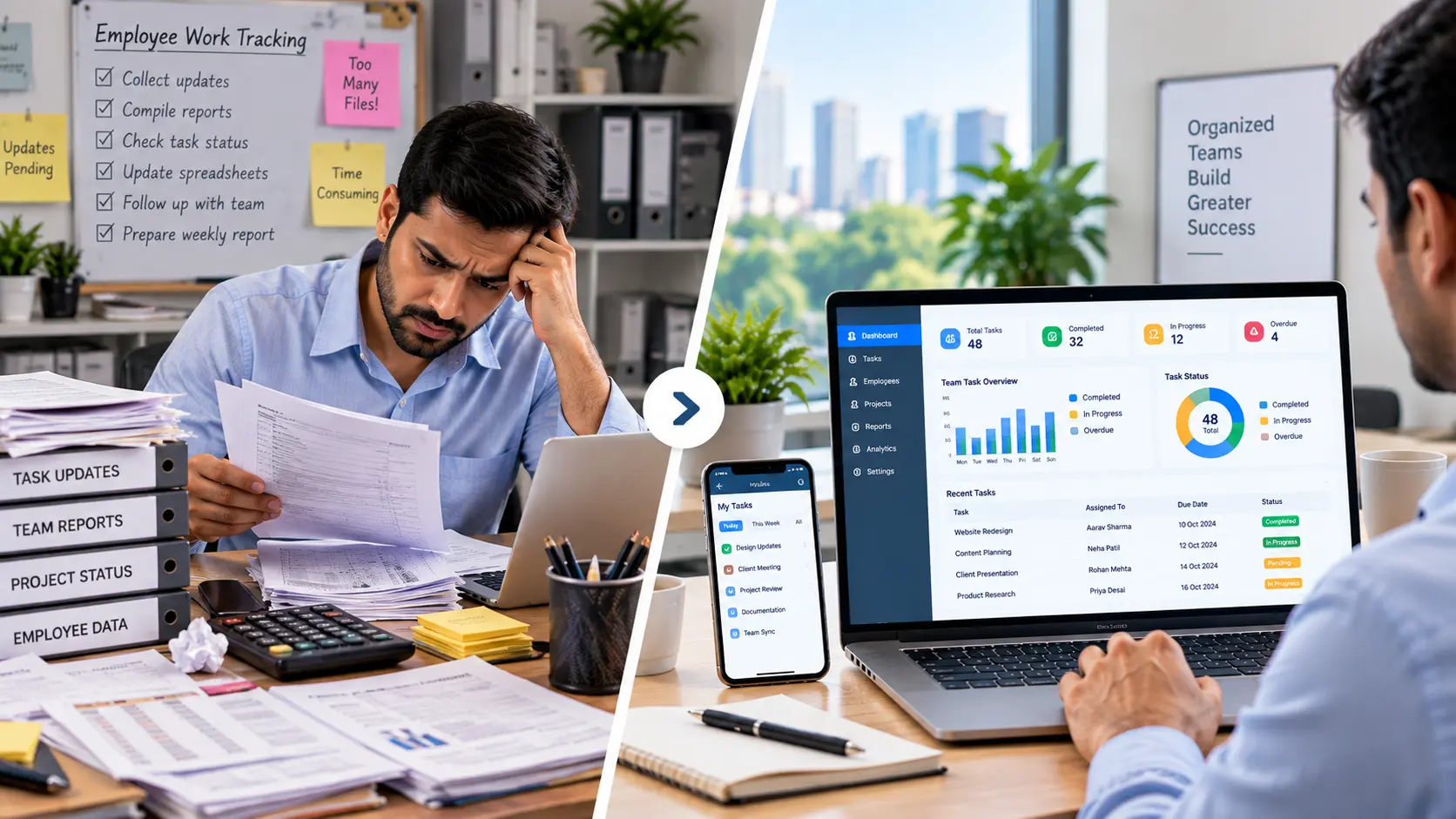
As businesses grow, tracking employee tasks through spreadsheets, emails, chat messages, and manually prepared reports becomes increasingly difficult. Managers may spend valuable time asking for updates, combining data, and identifying what has actually been completed. A better way to Track Employee Work is to use a centralized digital system that brings tasks, progress, responsibilities, and work updates into one organized workflow.
For startups, SMEs, agencies, service companies, and distributed teams, moving away from manual reporting can improve visibility while reducing repetitive administrative work. The goal should not be constant employee surveillance; effective work tracking focuses on outcomes, responsibilities, deadlines, and useful performance information.
Why Do Spreadsheets Become Difficult for Employee Work Tracking?
Spreadsheets are flexible and familiar, but they were not designed to manage every aspect of a growing team’s daily workflow.
What Goes Wrong as Teams Grow
- Outdated files that no longer reflect current work
- Duplicate entries across different copies
- Inconsistent reporting formats between team members
- Missed updates that nobody notices until a deadline
- Uncertainty over which document contains the latest information
Manual Reports Take Time
Consider a manager overseeing 15 employees. If every employee prepares a weekly report and the manager manually combines those updates, significant time can be spent on reporting rather than analyzing results or resolving problems.
A centralized employee work management system can make progress information easier to access without repeatedly creating reports from scratch.
What Is Automated Employee Work Tracking?
Automated employee work tracking uses digital software to organize tasks, responsibilities, work updates, deadlines, and related performance information.
Rather than asking employees to repeatedly report information already available in the system, managers can review relevant work data from a central dashboard.
What Businesses May Be Able to Manage
- Employee tasks and responsibilities
- Project or work status
- Deadlines and priorities
- Work updates and completion
- Team or individual progress
- Reports and performance insights
- Attendance or other workforce information
Businesses should choose features based on genuine operational requirements rather than collecting unnecessary employee data.
How Can You Track Employee Work Without Spreadsheets?
The most effective approach is to establish a standardized digital workflow.
Define Clear Responsibilities
Before implementing software, determine what needs to be tracked. Employees should understand their responsibilities, expected deliverables, deadlines, and how progress will be measured. Clear expectations make work-tracking data more meaningful.
Centralize Task Management
Tasks scattered across emails, spreadsheets, messages, and personal notes make progress difficult to understand. Using one centralized system allows managers and employees to work from a shared source of information.
Track Progress Instead of Constant Activity
Good employee management should focus on meaningful progress rather than creating unnecessary monitoring. A marketing manager may need to know whether a campaign has moved from planning to design, approval, and launch — not every action taken during the day.
Use Dashboards and Reports
A well-organized dashboard can help managers identify completed work, pending responsibilities, approaching deadlines, and areas requiring attention. This reduces the need to manually consolidate multiple spreadsheets before every review meeting.
How Does GoPareto Help Businesses Track Employee Work?
Organizations exploring ways to Track Employee Work digitally can evaluate GoPareto as an alternative to fragmented spreadsheets and manual reporting processes.
A centralized platform can help establish clearer workflows by keeping relevant workforce and work-management information organized in one environment.
This can be particularly useful for growing businesses where managers need visibility across multiple employees, teams, or responsibilities without relying on repeated manual status reports.
What Are the Benefits of Moving Away from Manual Reporting?
Replacing spreadsheet-based tracking with a structured digital workflow can offer several practical benefits.
Practical Benefits
- Better visibility: managers can access relevant work information without waiting for manually prepared reports
- Less repetitive administration: employees spend less time duplicating updates across different documents
- Clearer accountability: defined tasks, responsibilities, and deadlines make ownership easier to understand
- More consistent information: centralized records reduce confusion caused by multiple spreadsheet versions
- Improved scalability: a structured system becomes increasingly useful as employee numbers, projects, and reporting requirements grow
How to Choose an Employee Work Tracking System
Before choosing software, identify the problems you are trying to solve. Avoid implementing complicated tracking simply because the features are available.
| Factor | What to check |
|---|---|
| Ease of use | Whether both employees and managers can use it without extended training |
| Task and workflow management | Whether it matches how your team actually assigns and completes work |
| Progress visibility and reporting | Whether managers get what they need without building reports manually |
| Access controls and data security | Who can see what, and how employee information is protected |
| Remote and hybrid suitability | Whether distributed teams can work in it as easily as office-based staff |
| Integration and scalability | Fit with existing business processes, and headroom as the organization grows |
Businesses should also establish transparent policies explaining what information is tracked, why it is required, and how it will be used.
Key Takeaways
Spreadsheets can work for basic employee tracking, but they become harder to maintain as teams and workflows expand. Centralized work-management software can reduce manual reporting, improve task visibility, establish clearer accountability, and provide managers with more useful information.
Key takeaway: effective employee tracking should prioritize work outcomes and operational clarity rather than unnecessary surveillance. Measure what was delivered, not how many hours someone appeared busy.
Simplify Employee Work Management with GoPareto
Work Tracking Without the Spreadsheets
- Task management with defined owners, deadlines and status
- Timesheet compliance capturing work without repeated manual reporting
- A shared source of information for managers and employees alike
- Progress visible without chasing weekly status updates
- Extensive reports across tasks, timesheets and team performance
If manual reports and spreadsheets are making employee management unnecessarily complicated, explore GoPareto and evaluate how a centralized digital workflow could support your team. See also how GoPareto tracks employee work and compliance.
Conclusion
Businesses do not need to depend on endless spreadsheets and manually compiled reports to understand how work is progressing. Digital tools can provide a more organized, transparent, and scalable approach to Track Employee Work while reducing repetitive administration.
The right solution should give managers useful visibility while keeping employees focused on meaningful responsibilities, deliverables, and business outcomes.
Frequently Asked Questions (FAQs)
What is the best way to track employee work?
Can I track employee work without Excel?
How do managers track employee productivity?
Is employee work tracking suitable for remote teams?
Can automated tracking replace weekly reports?
What should businesses avoid when tracking employees?
When should a business replace spreadsheets?
Visit Us
GoPareto - Simple & Complete Business Management solution, Omkar Nandan Apartment, A1 201, near Navale Bridge, Kudale Baug, Narhe, Pune, Maharashtra 411041.
Related Blogs