Employee Wellness Programs: Integrating with Payroll and HR in Australia
October 9, 2026 | By Gopareto Marketing
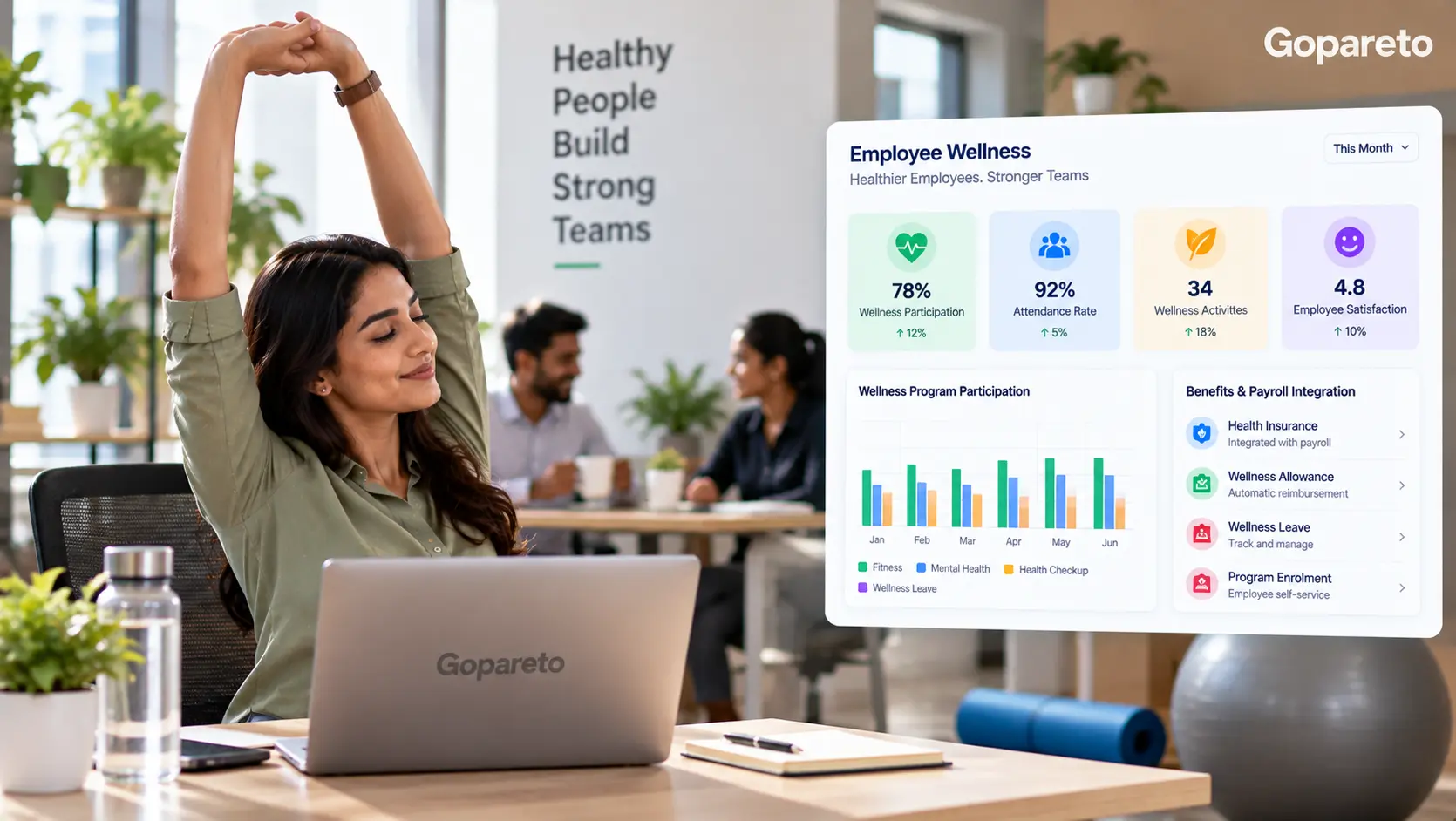
Wellness programs have moved from fruit bowls to structured benefits: employee assistance programs, gym subsidies, wellbeing days, health checks and salary-packaged extras. Every one of them touches payroll in some way. Get the treatment wrong and a well-meant benefit can create an unexpected fringe benefits tax bill, a super underpayment or an STP reporting error.
This guide explains how common wellness benefits are treated in Australia for FBT, PAYG withholding and superannuation, how to integrate them with payroll and HR, and how to protect employee health information along the way.
Why Wellness Programs Need a Payroll Plan
Wellness benefits are delivered in three basic ways, and each lands in a different part of the tax system.
Cash payments
- Wellness allowances or reimbursements paid through payroll
- Treated as salary or wages: PAYG withheld and reported through STP
- May count towards the earnings base for super
Non-cash benefits
- Gym memberships, health checks, gift cards, retreats
- Fall under the FBT regime, which runs 1 April to 31 March
- Some are exempt; others are taxable to the employer
Paid time
- Wellbeing days, mental health days, flexible hours
- Paid at the ordinary rate and tracked as a leave type
- Generally counts as ordinary time earnings for super
Salary packaging
- Employee gives up future salary in exchange for a benefit
- Must be agreed before the income is earned
- FBT may still apply to the benefit provided
FBT Treatment of Common Wellness Benefits
Fringe benefits tax is paid by the employer at 47% on the grossed-up taxable value of benefits. Several health-related benefits are exempt, which is why the design of a program matters as much as its cost.
| Benefit | Typical FBT treatment | Notes |
|---|---|---|
| Employee assistance program (EAP) counselling | Generally exempt | Work-related counselling is an exempt benefit; most EAPs are structured to qualify |
| Flu vaccinations and health screening | Generally exempt | Work-related preventative health care and medical screening exemptions apply when offered to employees generally |
| On-site gym or recreational facilities | Exempt | Recreational facilities located on the employer’s business premises are exempt |
| External gym membership paid by employer | Taxable | Usually an expense payment or property fringe benefit; rarely reduced by the otherwise-deductible rule |
| Private health insurance premiums | Taxable | Expense payment fringe benefit if the employer pays the employee’s premiums |
| Small, occasional gifts (e.g. a wellness voucher) | Possibly exempt | May qualify as a minor benefit if under A$300 and provided infrequently and irregularly |
| Employee-paid discounts negotiated by employer | Usually no FBT | If the employee pays the provider directly and the employer provides nothing, there is no fringe benefit |
Check before you launch
- Exemptions have conditions; the way a benefit is offered and paid can change its treatment
- Benefits provided to an employee’s family members can be treated differently
- Get advice from your tax agent or the ATO on any program with significant spend
Reportable fringe benefits
If the total taxable value of certain fringe benefits provided to an employee exceeds A$2,000 in an FBT year, the grossed-up value must be reported on their income statement through Single Touch Payroll as a reportable fringe benefits amount. It does not change the employee’s tax, but it can affect income tests for things like government benefits and the Medicare levy surcharge. Some benefits, including several exempt health-related ones, are excluded from reporting. Your payroll system needs to capture these values so they flow into STP correctly.
Salary Packaging Wellness Benefits
Salary packaging lets employees receive benefits in place of salary. It is attractive for exempt or concessionally taxed items, but less so for taxable benefits, where the FBT cost is usually passed back to the employee.
Agree it in advance
An effective arrangement must be agreed before the employee earns the income being sacrificed. Retrospective packaging is not effective for tax purposes.
Keep the super base right
Salary-sacrificed amounts are included in the earnings base used to calculate the super guarantee, so packaging must not reduce SG. Payroll needs to calculate SG on the pre-sacrifice figure.
Account for FBT cost
For taxable benefits, decide whether the FBT is absorbed by the business or included in the package cost, and document it in the agreement.
Report through STP
Salary sacrifice amounts and reportable fringe benefits are reported through STP Phase 2, so the payroll setup needs the right pay categories.
Not-for-profit employers
Public benevolent institutions, health promotion charities and public hospitals have access to FBT concessions with per-employee caps, which makes salary packaging a much bigger part of their wellness and benefits offer. The rules are specific to the type of organisation, so confirm eligibility with your adviser.
Wellbeing Leave and Paid Time Off
Many employers offer extra wellbeing or mental health days on top of the National Employment Standards. They are a simple, popular benefit, but they still need clean records.
- Set them up as a separate leave type, not as personal/carer’s leave
- Keep NES entitlements intact, including 10 days’ paid personal/carer’s leave a year for full-time employees
- Pay at the ordinary rate and apply super as for ordinary hours
- Put the rules in writing: eligibility, notice, carry-over and whether unused days are paid out
- Let employees see balances in self-service
- Report usage in aggregate to measure take-up
Our guide to making sure employees get the correct leave entitlements covers the NES baseline in more detail.
Wellness, WHS and Privacy
Psychosocial risk is a legal duty
Under work health and safety laws, employers must manage psychosocial hazards such as excessive workload, poor support and bullying, so far as is reasonably practicable. An EAP or yoga class is a useful support, but it does not replace that duty. Workload and hours data from attendance and timesheets can help spot risk early; see balancing workload and wellness.
Health information is sensitive
Health details collected through wellness programs are sensitive information. Keep them separate from performance and payroll records, collect only what you need, and ask providers such as EAPs for de-identified, aggregate reporting rather than individual usage. Do not assume the Privacy Act’s employee records exemption covers everything; it is narrow, and third-party providers have their own obligations.
Integrating a Wellness Program with Payroll and HR
Setup checklist
- List every benefit and classify it: cash, non-cash, paid time or salary packaged
- Confirm FBT treatment and any exemption conditions with your tax agent
- Create the right pay items, allowance types and leave types in payroll
- Check super is calculated on pre-sacrifice earnings and paid each pay cycle under Payday Super
- Track non-cash benefit values per employee for FBT and reportable fringe benefits
- Store signed salary packaging agreements on the employee file
- Publish the program and leave rules where employees can find them
- Review take-up and cost before each new FBT year starting 1 April
A self-service portal reduces the questions HR gets about balances, benefits and payslips; see how self-service portals reduce HR questions. And if you are reviewing benefits as part of a mid-year check, our January 2027 payroll planning guide covers FBT year-end preparation.
Common Mistakes
Assuming all health benefits are FBT-free
- External gym memberships and health insurance are usually taxable
Reducing super through packaging
- Calculating SG on post-sacrifice salary
Paying cash “outside payroll”
- Wellness allowances not taxed or reported through STP
Mixing health data with HR files
- Storing counselling or medical details on performance records
Frequently Asked Questions
Generally no. Work-related counselling provided through an EAP is usually an exempt benefit, but confirm the arrangement meets the conditions.
A cash allowance paid for general wellbeing is usually part of ordinary time earnings, so super guarantee generally applies. Check the ATO guidance for your specific allowance.
Yes, but it is usually a taxable fringe benefit, so the FBT cost often makes it less attractive than it first appears.
No. They are an extra benefit on top of NES entitlements and should be tracked as a separate leave type.
Conclusion
A wellness program only works if it is easy for employees to use and simple for the business to run. In Australia that means knowing which benefits are FBT-exempt, keeping super and STP reporting right when benefits are packaged or paid as allowances, tracking wellbeing leave properly, and treating health information with care. Build those rules into payroll and HR from the start, and the program can grow without creating tax or compliance surprises.
Ready to run wellness benefits through payroll properly?
How GoPareto Helps
- Australian payroll with super calculations, allowances, deductions and automatic payslips
- Custom leave types for wellbeing days, with balances tracked alongside NES leave
- Secure employee records with role-based access and audit trails
- An employee self-service portal for payslips, leave and policy documents
Visit Us
GoPareto - Simple & Complete Business Management solution, Omkar Nandan Apartment, A1 201, near Navale Bridge, Kudale Baug, Narhe, Pune, Maharashtra 411041.
Related Blogs