All-in-One HR Software: Why Bundled HR + Attendance + Payroll Beats Multiple Tools
September 5, 2026 | By Gopareto Marketing
It is Monday morning. Your HR manager signs into one system for employee records, a second for attendance, and a third for payroll. Three passwords, three employee databases, and no conversation between them.
An employee's name is spelled differently in each. Attendance says absent, HR says present. Payroll holds a phone number from two years ago. When the pay run comes around, someone reconciles all three by hand and hopes they caught everything.
Almost nobody chose this architecture. It accumulated. One tool solved HR, another solved attendance, payroll arrived from somewhere else, and integration was never designed — it was improvised. This guide is about what changes mechanically when those three become one, and how to tell a genuinely bundled system from three products behind one invoice.
The Cost You Can See and the Cost You Cannot
Subscription cost is the visible layer, and it is not where the money goes.
| Cost layer | What drives it | Shows up where? |
|---|---|---|
| Subscriptions | Three vendors, each priced independently | On the invoice |
| Reconciliation | Hours per week making three systems agree | In someone's calendar |
| Error correction | Payroll mistakes caused by mismatched data | In rework and reissued payslips |
| Compliance exposure | Statutory filings built on data that disagrees with itself | Only during an audit |
| Lost productivity | Multiple logins, duplicate entry, staff friction | Everywhere and nowhere |
For a typical Indian SMB, reconciliation alone routinely consumes several hours of an HR manager's week. Costed at a real hourly rate that is a substantial annual figure, and it buys nothing — it is pure friction created by the architecture. Our companion piece on bundled HR, payroll and attendance solutions works through the cost breakdown in detail.
How Data Actually Flows in a Bundled System
The argument for bundling is not a feature list. It is that certain sequences stop requiring a human in the middle.
Attendance to payroll
| Step | Three systems | One system |
|---|---|---|
| Employee clocks in | Recorded in the attendance tool | Recorded once |
| Period closes | Export a report, usually a spreadsheet | Nothing happens; the data is already there |
| Hours reach payroll | Someone imports or retypes them | Payroll reads the same records |
| Discrepancy found | Reconcile two datasets by hand | Cannot occur; there is one dataset |
Employee changes
A salary revision is approved. In three systems that is three updates, and the failure mode is doing two of them. In one system it is a single change that payroll reflects on the next run, with the approval recorded against it.
Leave to pay
Leave is requested, approved and deducted from a balance. Whether that leave is paid, unpaid or partly paid is a property of the leave type, so payroll applies the right treatment without anyone communicating the decision separately. Leave accounting stops being a monthly reconciliation task.
The Pattern Behind All Three
Every one of these sequences fails at the same point in a multi-tool stack: the moment a human carries data from one system to another. Bundling does not make each module better. It removes the carrying.
True Integration Versus Connected Products
This is the distinction that decides whether bundling delivers anything, and it is the one vendors are vaguest about.
| Connected products | Genuinely one system | |
|---|---|---|
| Data storage | Separate databases kept in step | One record, several interfaces onto it |
| Update timing | Periodic sync | Immediate, because there is nothing to sync |
| Failure mode | Sync errors, often silent until reconciliation | Conflicts are structurally impossible |
| Conflict resolution | Someone decides which system is right | Not applicable |
| Audit trail | Fragments across systems | One continuous trail |
| Onboarding a new module | Another integration to configure | Already present |
How to Test the Claim in a Demo
- “Show me a full pay run beginning with an employee clocking in.” Watch for any download, upload or file.
- “Change this employee's salary now, then open payroll.” If you have to wait for a sync, they are separate systems.
- “Approve this leave request, then show me its effect on pay.” The effect should already be visible.
- “What happens when the connection between modules fails?” In one system the question makes no sense; in a connected stack there is a real answer.
What a Complete Bundle Should Cover
HR
Employee records and documents, organisation hierarchy, policy acknowledgement, and the full lifecycle from onboarding through transfers to separation.
Attendance
Mobile and biometric clock-in, shift management for fixed, rotating and flexible patterns, and attendance analytics managers actually look at.
Leave
Configurable types and accruals, approval workflow, live balances, and a defined pay treatment per leave type.
Payroll
Salary structures, automatic calculation, statutory deductions including PF, ESI and TDS, payslip generation and bank transfer.
Invoicing
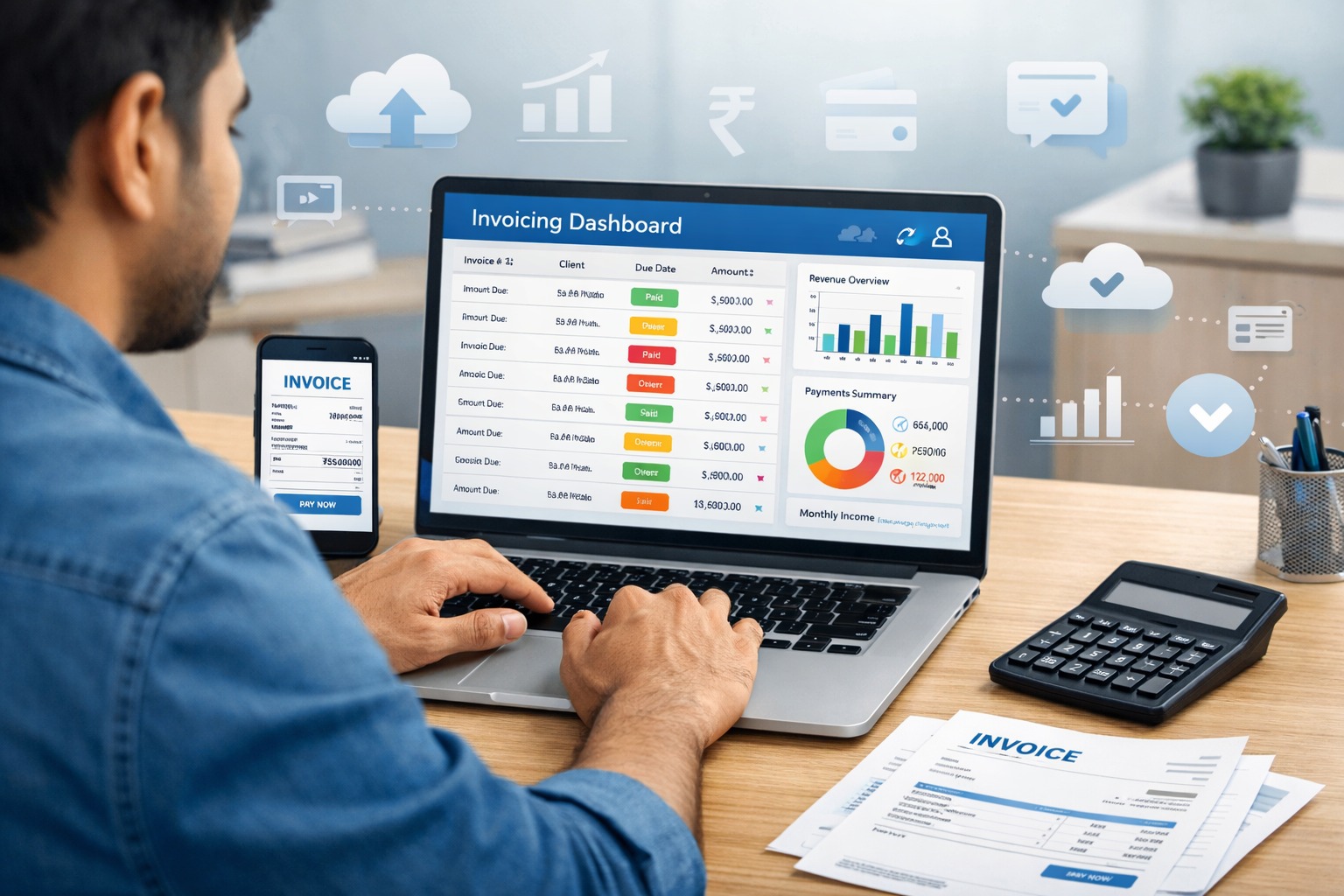
Client billing in the same platform, so hours that are paid and hours that are billed come from one source.
Reporting and compliance
Pre-built statutory reports, cost analysis by department, and audit trails that do not need assembling.
Compliance deserves particular scrutiny in India, where PF, ESI, TDS and state-level obligations all derive from payroll data. Our India payroll compliance calendar for 2027 sets out the deadlines a bundle should be helping you meet.
Head to Head
| Dimension | Multiple tools | Bundled platform |
|---|---|---|
| Employee record | Three copies that drift | One |
| Attendance to pay | Manual transfer each cycle | Automatic |
| Training | Three interfaces and vocabularies | One |
| Support | Three vendors, plus arguments about whose fault it is | One accountable vendor |
| Compliance data | Assembled from several sources | Derived from one |
| Time to add a module | New procurement and integration | Configuration |
| Employee experience | Several apps and passwords | One |
Worth saying plainly: a bundled platform rarely beats a specialist tool on that specialist's home ground. It wins on the seams between tools, which is where SMB time and compliance risk actually go.
Consolidating Without Disruption
Map what you have
List each tool, its cost, what it uniquely does, and every manual step between them. The manual steps are the business case.
Clean before you migrate
Decide which system holds the correct version of each field and resolve conflicts first. Migrating three inconsistent datasets creates one inconsistent dataset.
Run one cycle in parallel
Process a full pay run both ways and compare every employee line before you retire anything.
Retire deliberately
Cancel old subscriptions only after a clean cycle, and export historical records you are contractually required to retain.
How GoPareto Is Built
One Record, Every Module
- Attendance management as the single source of hours
- Leave policy and compliance connected to how leave is paid
- Automatic payslip generation with PF, ESI and TDS applied by rule
- Timesheet compliance linking paid hours to billable hours
- Invoicing for small business on the same platform
- Extensive reports drawn from one dataset
For a structured way to evaluate options see the all-in-one HR software comparison for 2027, and for the usability side — which decides whether any of this gets adopted — HR software that is actually easy to use.
Key takeaway: ask vendors to demonstrate a pay run starting from a clock-in. Every meaningful claim about integration either survives that demonstration or does not, and no feature comparison tells you as much.
Related Blogs