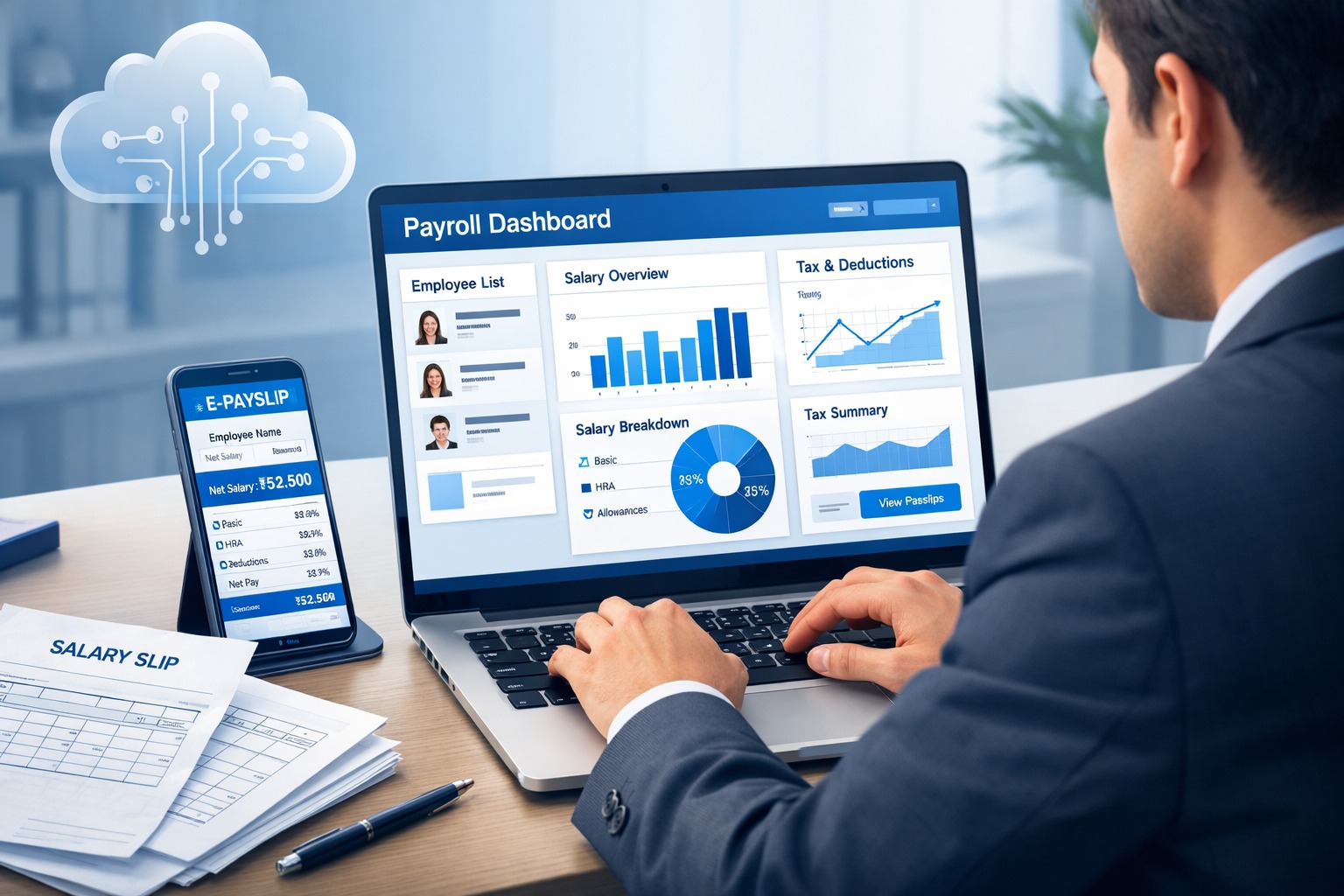
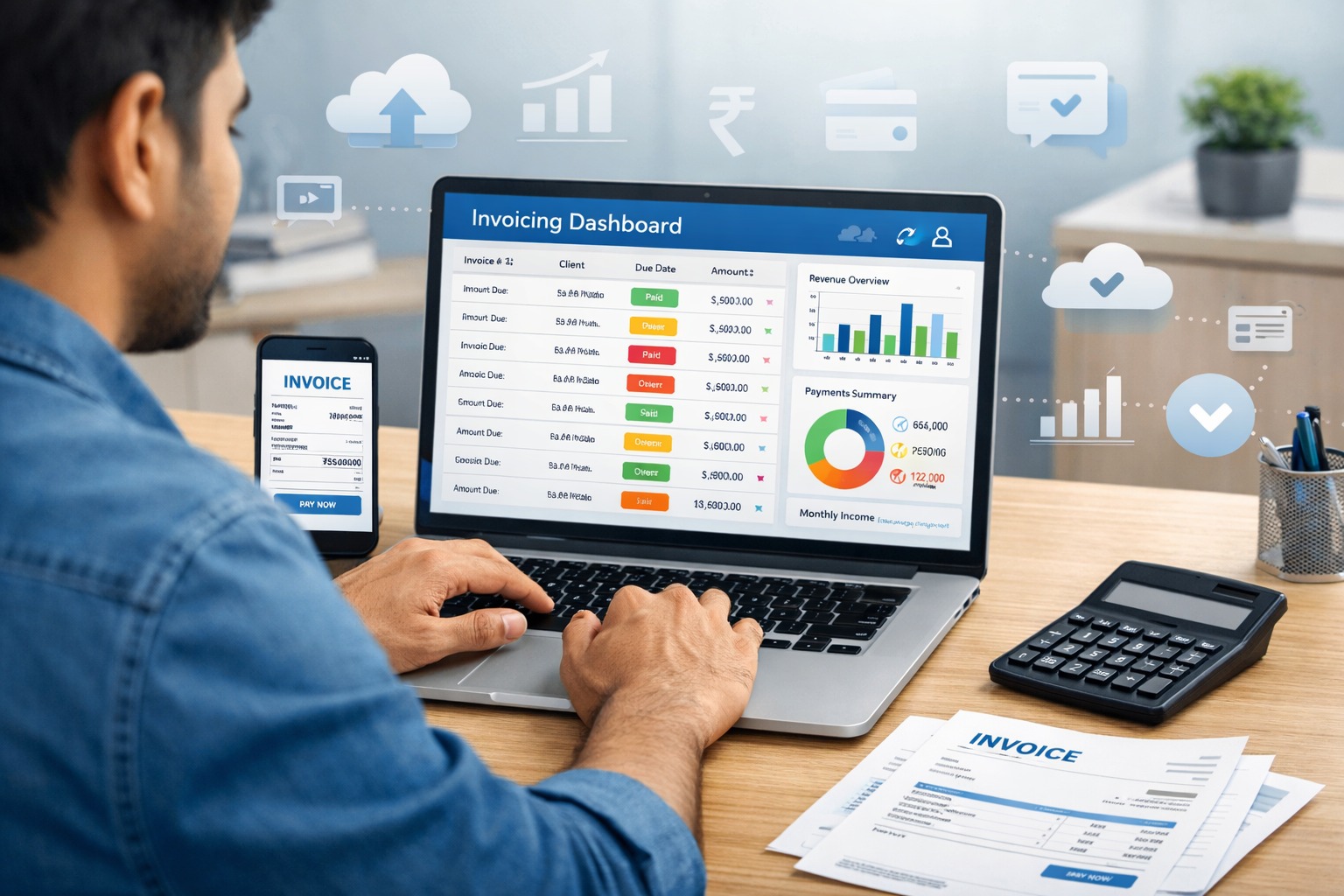
All-in-One HR + Payroll + Attendance: Why Bundled Solutions Beat Multiple Tools
September 1, 2026 | By Gopareto Marketing
Running a small business means juggling a lot. The last thing you need is to juggle five separate software subscriptions just to manage the people who work for you. Yet that is exactly what happens when HR, attendance and payroll each live in a different tool.
The result is familiar to most SMB owners: multiple logins, records that do not agree with each other, integration bills, and employees who are never quite sure which app to open. A bundled platform — one system that handles HR management, attendance tracking and payroll processing together — removes that whole category of problem.
What Running Three Separate Tools Actually Costs You
- Multiple sets of login credentials, and employees unsure where to check their pay
- Data that does not sync — attendance records that do not match what payroll paid out
- Integration work you have to pay a developer to build and then maintain
- Invoices from three or four different vendors every month
- Compliance exposure, because there is no single source of truth to audit against
The Hidden Cost of Multiple Tools
Most businesses only count the subscription line items. That is the smaller half of the bill. Below is a realistic breakdown for a fifty-person company running three separate systems.
| Cost line | Typical monthly | Annual | Visible on your invoice? |
|---|---|---|---|
| HR software subscription | ₹5,000 – ₹15,000 | ₹60,000 – ₹1,80,000 | Yes |
| Attendance software subscription | ₹2,000 – ₹8,000 | ₹24,000 – ₹96,000 | Yes |
| Payroll software subscription | ₹3,000 – ₹10,000 | ₹36,000 – ₹1,20,000 | Yes |
| Integration build and upkeep | ₹2,000 – ₹10,000 | ₹24,000 – ₹1,20,000 | No |
| Duplicate data entry (HR time) | ₹2,000 – ₹4,000 | ₹24,000 – ₹48,000 | No |
| Training and split vendor support | ₹2,000 – ₹3,000 | ₹24,000 – ₹36,000 | No |
| Compliance risk and correction | Variable | ₹10,000 – ₹50,000 | No |
Add it up and a fifty-person company frequently spends between ₹3.7 lakh and ₹4.1 lakh a year on a stack it believed cost ₹2.4 lakh. Roughly a third of the real spend never appears on a software invoice at all. These figures are illustrative ranges based on common SMB stacks; your own numbers will differ, but the shape of the gap rarely does.
Six Reasons Bundled Solutions Win
A single source of truth
Employee data is entered once rather than three times. Attendance flows straight into payroll, managers see the same numbers HR sees, and there are no gaps for an auditor to find.
Data that stays consistent
When attendance and payroll are the same system, a payslip cannot disagree with a timesheet. Most pay disputes in small businesses start as a mismatch between two databases.
Lower total cost
One subscription, no integration build, one training curve, one support contract. The savings come mostly from the costs that were never on the invoice.
Faster to go live
Selecting and implementing three vendors, then wiring them together, routinely takes six to twelve months. A single bundled platform is typically live in four to eight weeks.
Compliance is easier to hold
PF, ESI, income tax and state labour rules all depend on accurate attendance. When that data never leaves the system, statutory calculations have one fewer place to go wrong.
A better experience for staff
One app to clock in, request leave and download a payslip. One password. Adoption is dramatically higher when there is only one thing to adopt.
What a Complete Bundled HR Solution Must Include
Not every platform that calls itself all-in-one actually is. Use the list below as a specification when you evaluate vendors.
HR module
- Employee database covering personal, contact and emergency details
- Organisation chart and reporting hierarchy
- Document storage for contracts, certifications and licences
- A policy library with acknowledgement tracking
- Leave balances, request workflow and encashment calculation
Attendance module
- Mobile clock in and out, with biometric integration for fixed sites
- Geolocation capture where the role genuinely requires it
- Daily, weekly and monthly attendance reporting
- Late and absence reporting visible to line managers
- Shift management, including swaps and on-call rosters
Payroll module
- Automated salary calculation from approved attendance
- Statutory deductions handled natively — income tax, PF and ESI
- Allowances, deductions and reimbursements applied by rule, not by hand
- Digital payslips employees can view and download themselves
- Bulk bank transfer with reconciliation and confirmation records
- Compliance filings and audit-ready statutory reports
Reporting, analytics and integration
- Company, department and manager dashboards
- Cost analysis by department and cost centre
- Custom reports and data export
- Connections to accounting software and to your bank
- API access for anything genuinely bespoke
If a platform covers the workforce side but leaves you invoicing clients from a separate tool, you have not really consolidated. Our guide to invoicing and accounting software for small business covers that half of the stack.
How to Choose a Bundled HR Solution
1. Verify that the integration is real
Plenty of vendors bundle three separate products behind one invoice. Ask specifically: does approved attendance flow into payroll without anyone exporting a file? Does changing an employee record update every module at once? Do reports pull from one database?
Red Flag
- If the answer is “these modules can integrate”, they are separate systems with a connector. True bundling means they were built as one thing.
2. Check compliance coverage properly
Indian compliance is not uniform. Ask whether the system handles PF, ESI and income tax automatically, whether it updates when rates change, and specifically whether it handles your state's labour rules. Ask to see a sample compliance report rather than a slide about one.
3. Judge the mobile app the way an employee would
Your team will use this daily, often on a patchy connection. It needs to be fast, obvious without training, and functional offline. A desktop interface squeezed onto a phone screen will quietly kill adoption.
4. Trial it with your own data
Generic demos prove nothing. Run a trial with your real headcount, your real salary structure, your leave policy and your state's requirements. If the vendor will not support that, treat it as an answer.
5. Understand what support looks like
You want documentation, email support with a stated response time, phone support for anything urgent, and a named contact through onboarding. Payroll questions are rarely convenient.
GoPareto: HR, Attendance and Payroll in One Platform
GoPareto was built for Indian small and mid-sized businesses that want one system rather than a stack. Attendance, leave, payroll and invoicing sit on the same data, so the numbers cannot drift apart.
What Is Included
- Attendance management with a mobile app and biometric support
- Leave policy and compliance configured once and applied automatically
- Automatic payslip generation driven by approved attendance
- Timesheet compliance for project and client billing
- Invoicing for small business in the same system
- Extensive reporting across workforce, cost and compliance
If payroll accuracy is your immediate pain rather than tool sprawl, start with our companion guide on building an error-free payroll system. If you are weighing a local platform against an international one, why made-in-India payroll software matters works through the compliance argument.
Common Questions About Bundled HR Solutions
Is bundled genuinely better than best-of-breed tools?
For most SMBs, yes. Separate tools create data inconsistency, integration cost and compliance exposure, and those three problems compound. Larger organisations with dedicated integration teams can make best-of-breed work; small teams usually cannot.
We have already paid for separate tools. Is switching worth it?
Sunk cost is not a reason to keep paying. Compare the remaining annual cost of the current stack, including the hidden lines above, against a single platform. Most migrations pay for themselves well inside a year.
Will employees accept another new system?
They generally prefer one app to three. Adoption problems come from bad interfaces, not from change itself.
Can it scale from ten employees to a hundred?
A well-built platform should. What changes is configuration depth — approval chains, shift patterns, cost centres — not the platform.
Key takeaway: the argument for bundling is not that any single module is better. It is that the seams between modules are where SMB time, money and compliance risk actually disappear — and bundling removes the seams.
Related Blogs