How to Be Audit-Ready Without Hiring a Compliance Officer
August 5, 2026 | By Gopareto Marketing

Here's the thing about audits: they terrify small business owners. You imagine auditors in dark suits rifling through your files, finding issues, and suddenly you're facing fines. But the honest truth is that most audit failures happen because companies haven't organised their documentation — not because they're doing anything illegal.
The good news? You don't need to hire a full-time compliance officer to get audit-ready. You need a system, consistency, and some honest self-assessment. The businesses that pass audits with flying colours aren't the ones with the biggest budgets. They're the ones with clear processes, good record-keeping, and someone internally who owns the checklist. That someone could be you.
1. Start With an Honest Audit of Your Own Records
Before an external auditor ever walks through your door, you need to know where you stand. This isn't about finding problems to hide — it's about understanding what you actually have and what gaps exist.
Take your HRMS, your email and your filing cabinet, and walk through the last 12 months. For every employee, can you find:
- Original hiring documents — employment contract, offer letter, signed agreements
- Tax forms and identification records
- Salary records — payslips, bank transfers, statutory deductions
- Attendance logs covering the full 12-month period
- Leave records — approvals, balances, encashments
- Performance reviews or formal feedback
- Any disciplinary actions or warnings, where applicable
This exercise takes time, but it's free — you're essentially doing the auditor's first job for them and creating a baseline. When you find gaps (and you will), don't panic. Note them in a simple spreadsheet: what's missing, what the impact is, and whether it can be reconstructed. That spreadsheet is your roadmap.
2. Document Everything Going Forward
Auditors want to see that you're consistent and intentional about HR practices, and that means documentation. The good news is documentation doesn't need to be fancy. It needs to exist and make sense.
Start with your hiring process. Create a simple template for every new hire that captures date of hire, role and job description, compensation details, tax information collected, and a signed acknowledgement that they've read company policy. You don't need a 50-page handbook — a one-pager covering attendance, leave, confidentiality and conduct works fine. Get it signed and keep the signed copy.
For attendance, consistency matters more than perfection. An attendance management system creates an automatic audit trail; spreadsheets and manual logs don't. Retroactively reconstructing last year's attendance is rough, but from the current period forward you can make it automatic.
For salary payments, keep records. Bank transfers are themselves documentation. Create a monthly checklist: salary processed on this date, deductions calculated, slips generated, uploaded to employee portals — then mark it complete. For leaves, maintain a running log of approvals, dates and balances. The point is that it's visible and verifiable.
3. Build a Simple Compliance Calendar
Audits check whether you're meeting statutory deadlines. In India that means filing returns, paying taxes on time, uploading forms to government portals and maintaining specific records. Create a calendar — digital or physical — with your key deadlines:
- Quarterly income tax returns, where applicable
- Annual TDS reconciliation, if you deduct tax at source
- Provident Fund remittances for eligible employees
- Professional tax, if your state requires it
- ESI contributions, where applicable
- Annual leave encashment calculations
- Annual appraisal and increment reviews
For each deadline, set a reminder two weeks before, then a completion reminder to mark it done. The auditor will ask whether you filed on time; being able to show "yes, and here's the proof" is half the battle. Keep all receipts, acknowledgements and filing confirmations in a dedicated folder, organised by year.
4. Create Simple Policies and Actually Follow Them
You don't need a 200-page policy manual. You need clarity on how you operate. Write down, in plain language, your policies on:
- Attendance — how you track it, what counts as leave, whether people can work from home
- Compensation — how often you pay and how bonuses are calculated
- Conflict of interest — your approach and disclosure process
- Data privacy — how you handle employee and customer data
- Termination — your process, notice and final settlement
Each policy should be two to four pages at most. Share it with your team, have them acknowledge in writing that they've read it, and file those acknowledgements. A documented leave policy is one of the first things an auditor will ask for.
The auditor's job is to verify you're operating within legal bounds. If your policy says you pay by the 5th of every month and you actually do, you're fine. If you say it but don't, that's a red flag. Write policies you can actually follow — a simple sustainable policy beats an ambitious one you'll abandon.
5. Delegate, Don't Ignore — Create an Internal Owner
You can manage most of this yourself, but the real key is consistency, and that requires someone to own it. That person doesn't need a fancy title or degree. It might be your finance manager, your HR person, your office manager, or the one admin who genuinely likes organisation.
Whoever it is, give them the compliance calendar to monitor, the HRMS or documentation system to keep accurate, and a monthly report to produce: here's what's compliant, here's what needs attention. Spend one hour a month reviewing that report, asking questions and signing off. That's two to three hours a month from you, and it removes the risk of things falling through the cracks.
If your team is tiny and you're doing this solo, that's fine — just protect the time on your calendar. Treat compliance like a client meeting: non-negotiable.
6. Use Technology to Automate the Boring Stuff
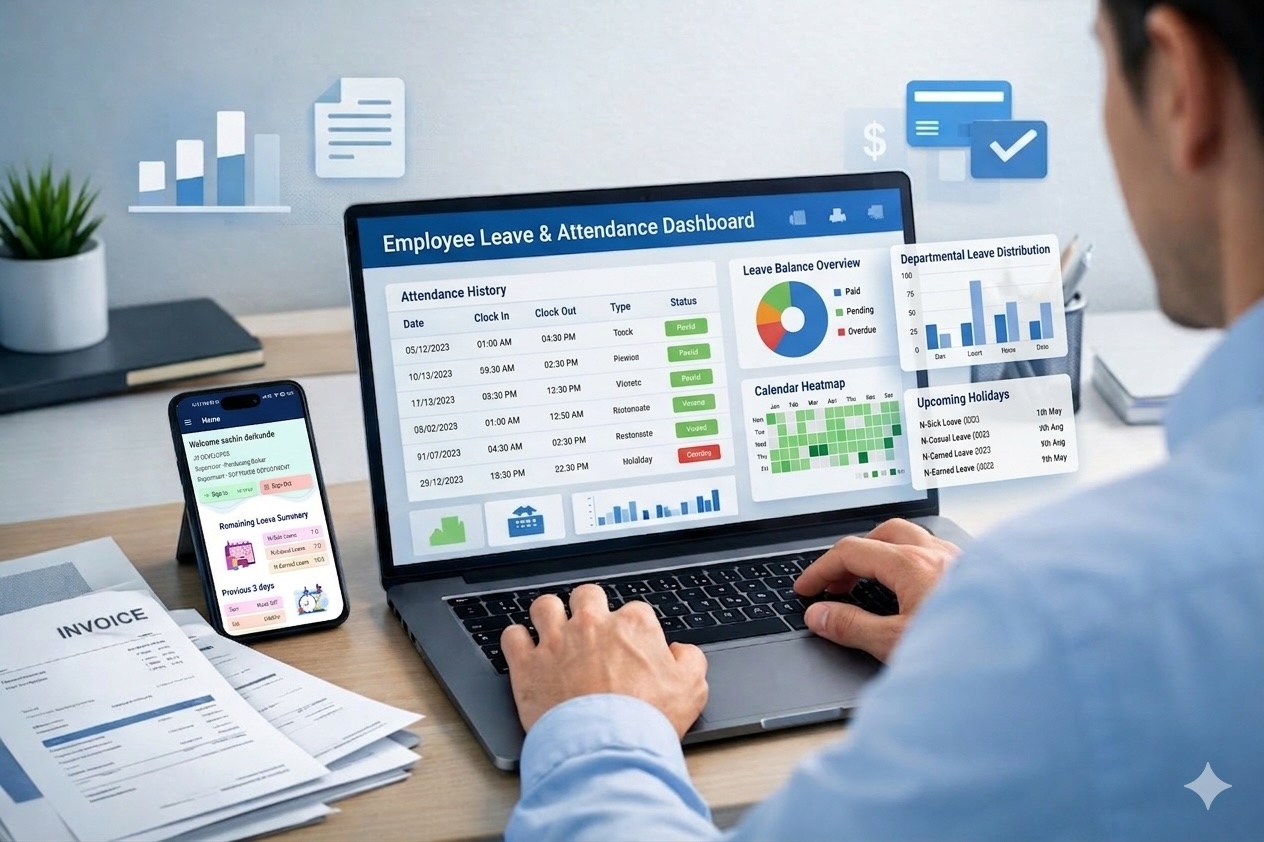
An HRMS isn't a luxury for small businesses; it's a time-saver. Good systems handle automatic attendance tracking, leave balance calculations, salary slip generation, tax deduction calculations and statutory filing inputs.
You're not paying for fancy features. You're paying to eliminate manual errors and create audit trails. When an auditor asks to see June's attendance, you pull a report from your reporting module. No guessing, no manual searching.
For document storage, use a simple cloud system or your HRMS's document module, organised by year and category — hiring documents, tax, payroll and so on. Auditors appreciate being able to access records without hunting for them. A good small-business HRMS costs a fraction of hiring a part-time compliance person and saves far more in penalties and missed deadlines.
7. Run a Mock Audit Every Year
Every 12 months, set aside a day and audit yourself. Pull together the same documents an external auditor would want: employment contracts, tax filings, payroll records, attendance logs and leave records.
Review them like a skeptic. Are they organised? Can you explain every decision? Are there inconsistencies? If you find gaps, fix them. If you notice a pattern of missed deadlines, investigate why and fix the process. This self-audit takes four to six hours a year. It's mundane work, but it eliminates surprises — when the real auditor arrives, you're confident instead of scrambling.
Your Audit-Ready Roadmap
Here's what it boils down to:
- Understand your current state — one-time, six to eight hours
- Fix critical gaps — one-time, varies with what you find
- Document everything going forward — about five minutes per hire
- Track deadlines and comply — two to three hours monthly
- Appoint an internal owner — that person's ongoing time
- Use a basic HRMS — a predictable monthly cost
- Self-audit annually — four to six hours a year
Total ongoing time is roughly three hours a month, at a software cost far below a compliance officer's salary and far below the cost of audit penalties. The math is clear: audit readiness is cheaper and easier than chaos.
Conclusion
You don't need a degree in compliance. You need a system, consistency, and the willingness to spend a few hours a month staying ahead of it. Start today: write down three things you need to fix immediately, then build the habit. GoPareto brings attendance, payroll, statutory deductions and documentation into one platform, so audit-ready records take minutes instead of months.
Frequently Asked Questions (FAQs)
1. Do small businesses really need to prepare for HR audits?
Yes. Statutory obligations around wages, attendance, PF and tax apply regardless of company size, and most audit findings come from missing documentation rather than deliberate non-compliance.
2. What records do auditors ask for most often?
Employment contracts, payroll and payslip records, attendance logs, leave approvals and balances, and proof of statutory filings such as PF, ESI and TDS.
3. How long should HR records be retained?
Retention periods vary by regulation, but keeping payroll, attendance and statutory filing records for several years — organised by financial year — is the safe baseline.
4. Can an HRMS replace a compliance officer?
It can replace most of the manual work — tracking, calculating and record-keeping — but you still need one internal owner who monitors the compliance calendar and signs off monthly.
5. How does GoPareto help with audit readiness?
GoPareto timestamps attendance and leave data, generates payslips and statutory reports automatically, stores employee documents centrally, and produces exportable reports for any period an auditor requests.
Visit Us
GoPareto - Simple & Complete Business Management solution, Omkar Nandan Apartment, A1 201, near Navale Bridge, Kudale Baug, Narhe, Pune, Maharashtra 411041.
Related Blogs