Payroll Calculation Software: Simplify Payroll Processing and Improve Accuracy
August 20, 2026 | By Gopareto Marketing

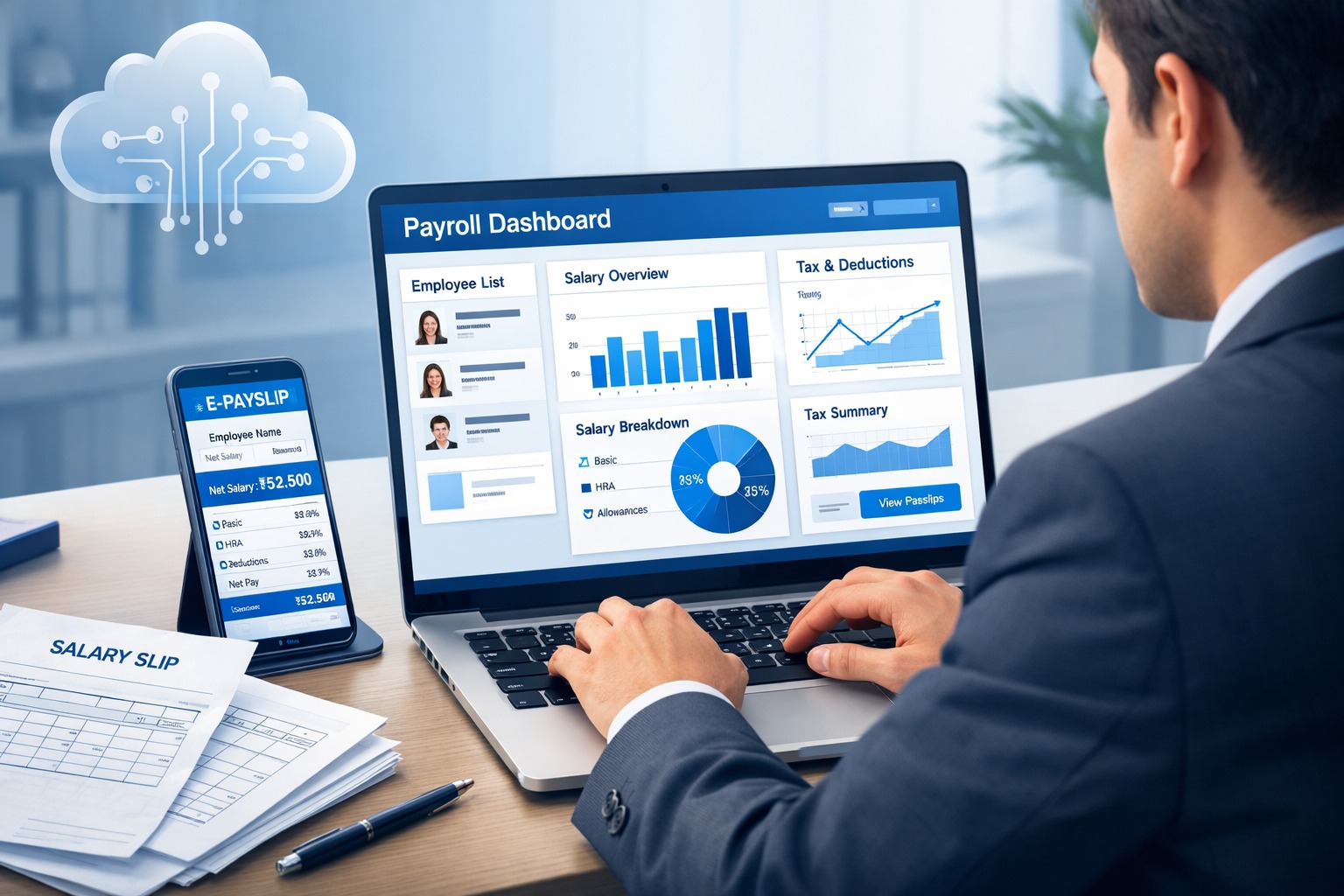
Managing employee salaries accurately and on time is an essential responsibility for every organization. Payroll calculation software helps businesses automate salary calculations, reduce manual errors, streamline payroll processes, and maintain organized employee compensation records. Instead of depending on spreadsheets and repetitive calculations, HR and finance teams can use a centralized platform to manage salary components, deductions, attendance-related inputs, and payroll information more efficiently.
As businesses grow, payroll automation becomes increasingly valuable for improving accuracy, saving administrative time, and creating a smoother experience for both employees and payroll administrators.
What Is Payroll Calculation Software?
Payroll calculation software is a digital solution designed to automate the process of calculating employee salaries and managing payroll-related information. It can help organizations handle salary structures, earnings, deductions, working days, leave information, and other payroll components through a centralized system.
Traditional payroll processing often involves spreadsheets and multiple manual calculations. While these methods may work for very small teams, they can become difficult to manage as employee numbers increase.
A payroll platform can reduce repetitive work by organizing payroll data and automating calculations based on configured salary rules and employee information.
Why Businesses Need Payroll Automation
Payroll is a recurring business process that requires accuracy and consistency. Even a small calculation mistake can create confusion for employees and additional work for HR teams.
Manual payroll processing can result in:
- Calculation errors
- Incorrect deductions
- Delayed salary processing
- Duplicate data entry
- Difficulty maintaining employee records
- Time-consuming spreadsheet management
- Limited payroll visibility
- Increased administrative workload
Automation can help businesses establish a more structured payroll workflow. HR teams can manage employee information centrally while reducing repetitive calculations and improving process consistency.
Key Features of Payroll Calculation Software
1. Automated salary calculations. A payroll platform can calculate employee salaries based on predefined salary structures and applicable payroll components. Automation reduces the need for repetitive manual calculations.
2. Salary component management. Organizations may have different salary structures for different employees. A centralized system can help manage components such as basic salary, allowances, deductions, bonuses, and other applicable elements.
3. Attendance and leave inputs. Payroll calculations often depend on attendance, working days, and approved leave. Integrating these inputs into payroll workflows can reduce manual data transfer between HR systems and payroll spreadsheets.
4. Deduction management. Payroll processing may involve various deductions. A digital platform can organize deduction-related information and apply configured rules during payroll processing.
5. Employee payroll records. Maintaining historical payroll information helps HR teams access previous salary records when required. Centralized records also make payroll administration more organized.
6. Payroll reports. Reports can help HR and finance teams review payroll information, identify discrepancies, and understand salary-related expenses.
How Payroll Software Improves Accuracy
Payroll accuracy depends on reliable employee information and consistent calculations. When payroll is managed manually, HR professionals may need to copy information between multiple spreadsheets and systems. Every additional manual step creates an opportunity for errors.
Automation can reduce these risks by keeping relevant information within a centralized platform. When employee details, salary structures, attendance inputs, and deductions are organized properly, payroll administrators can process salaries more systematically.
The result can be fewer calculation errors, less repetitive work, and improved confidence in payroll data.
Benefits for HR and Finance Teams
Saves administrative time. Automating repetitive calculations allows HR and finance teams to spend less time maintaining spreadsheets and performing routine calculations.
Reduces manual errors. Automated processes can minimize mistakes caused by incorrect formulas, duplicate entries, or manual calculations.
Improves data organization. Centralized payroll records make employee salary information easier to manage and retrieve.
Supports faster processing. A structured payroll workflow can help organizations complete monthly salary processing more efficiently.
Improves transparency. Employees and authorized HR personnel can have better visibility into relevant payroll information depending on the organization's access controls.
Choosing the Best Payroll Solution
When selecting the best payroll calculation software, businesses should look beyond basic salary calculations. A suitable platform should support the organization's workforce size, salary structures, payroll processes, reporting requirements, and future growth.
Important factors to evaluate include:
- Ease of use
- Payroll automation
- Employee data management
- Salary structure flexibility
- Attendance integration
- Leave integration
- Deduction handling
- Payroll reporting
- Data security
- Scalability
- Mobile or cloud accessibility
- Integration with other HR processes
A solution should simplify payroll operations rather than add unnecessary complexity.
Payroll Software for Growing Businesses
Small and medium-sized businesses often start payroll management with spreadsheets because their workforce is relatively small. However, as the company grows, payroll becomes more complicated.
More employees mean more salary structures, attendance records, leave information, deductions, and payroll records to manage.
At this stage, automation can provide significant operational benefits. Instead of increasing administrative workload with every new employee, organizations can establish standardized payroll processes that scale with business growth.
How GoPareto Supports Payroll Management
GoPareto provides payroll calculation capabilities designed to help businesses streamline salary processing and manage payroll information more efficiently. The platform can help organizations reduce dependence on manual calculations and bring important payroll processes into a centralized digital environment.
By connecting payroll with relevant employee information and HR workflows, businesses can improve the consistency of payroll processing and reduce repetitive administrative activities.
Payroll management can also work alongside broader workforce processes such as attendance and leave management, helping organizations create a more connected HR environment.
Payroll Automation and Employee Experience
Payroll accuracy directly affects employee confidence. Employees expect their salaries to be processed correctly and on time.
A well-organized payroll process can reduce confusion around salary calculations and provide HR teams with a structured way to address payroll-related queries.
When payroll information is managed systematically, organizations can also improve internal processes and reduce the administrative burden associated with monthly salary processing.
Best Practices for Effective Payroll Management
Businesses can improve payroll efficiency by following a few practical principles:
- Maintain accurate employee data — ensure employee information is updated regularly.
- Standardize salary structures — clearly define salary components and applicable rules.
- Integrate attendance and leave — use reliable attendance and leave data when calculating payroll.
- Automate repetitive calculations — reduce dependence on manual spreadsheet formulas.
- Review payroll before processing — establish verification steps to identify discrepancies.
- Maintain secure records — protect employee compensation and payroll information with appropriate access controls.
- Generate regular reports — use payroll reports to monitor salary expenses and identify inconsistencies.
These practices can help organizations create a reliable and repeatable payroll workflow.
Conclusion
Efficient payroll management requires accuracy, consistency, and organized employee information. Businesses that continue relying heavily on manual spreadsheets may face increasing administrative workloads as their workforce grows. A centralized digital solution can simplify calculations, reduce repetitive tasks, improve data organization, and support faster payroll processing.
By adopting payroll calculation software, organizations can create a more efficient payroll workflow, improve administrative productivity, and provide employees with a more reliable salary-processing experience.
Frequently Asked Questions (FAQs)
What is payroll calculation software?
How does payroll software reduce calculation errors?
Can payroll software manage different employee salary structures?
Can attendance and leave data be used for payroll?
Is payroll automation useful for small businesses?
What should businesses consider when selecting payroll software?
How can GoPareto help with payroll processing?
Visit Us
GoPareto - Simple & Complete Business Management solution, Omkar Nandan Apartment, A1 201, near Navale Bridge, Kudale Baug, Narhe, Pune, Maharashtra 411041.
Related Blogs